What Account Verification Durations Indicate About Retention Trends in Worldwide Digital Poker Platforms
Viktor Günther · Sep 12, 2026
What Account Verification Durations Indicate About Retention Trends in Worldwide Digital Poker Platforms
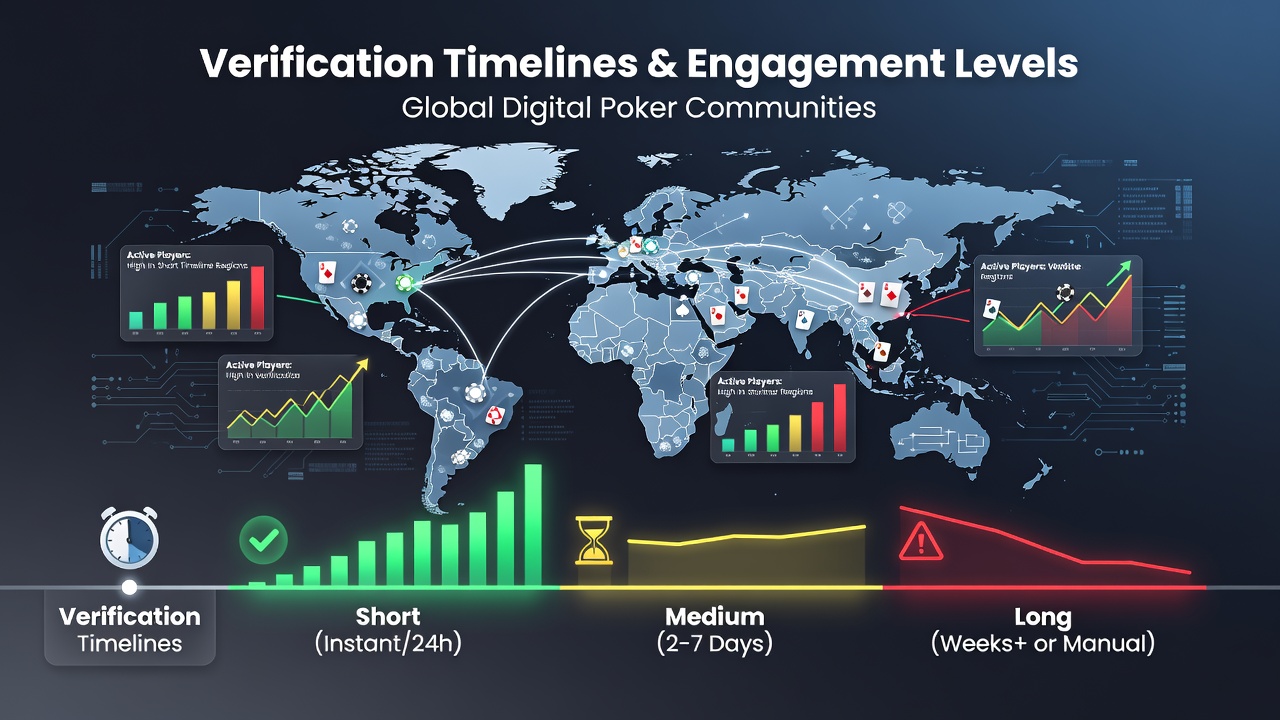
Account verification stands as a standard gatekeeper in digital poker operations, and timelines associated with this process have drawn attention from analysts tracking participation patterns across multiple continents, where operators must balance regulatory compliance with user convenience. Data compiled through 2025 and into September 2026 shows that shorter verification windows often coincide with higher login frequencies, while extended delays correlate with reduced session lengths in many jurisdictions.
Core Elements of Verification Procedures
Operators require documentation such as government-issued identification, proof of address, and sometimes source-of-funds declarations, and the time required to review these materials varies by region because regulatory frameworks differ in their scrutiny levels. In markets where automated checks handle initial screening, completion occurs within hours, whereas manual reviews in high-volume periods extend into several days. Platforms operating across borders must align with local rules, which creates noticeable differences in average processing speeds between Europe, North America, and parts of Asia-Pacific.
Those studying user behavior note that players who complete verification quickly tend to maintain consistent activity across multiple weeks, and figures from industry reports indicate that engagement metrics stabilize once accounts receive approval. Conversely, accounts left in pending status for longer periods show measurable drops in deposit activity and tournament entries, according to aggregated platform data reviewed by researchers at the International Gaming Institute.
Patterns Linking Timelines to Activity Levels
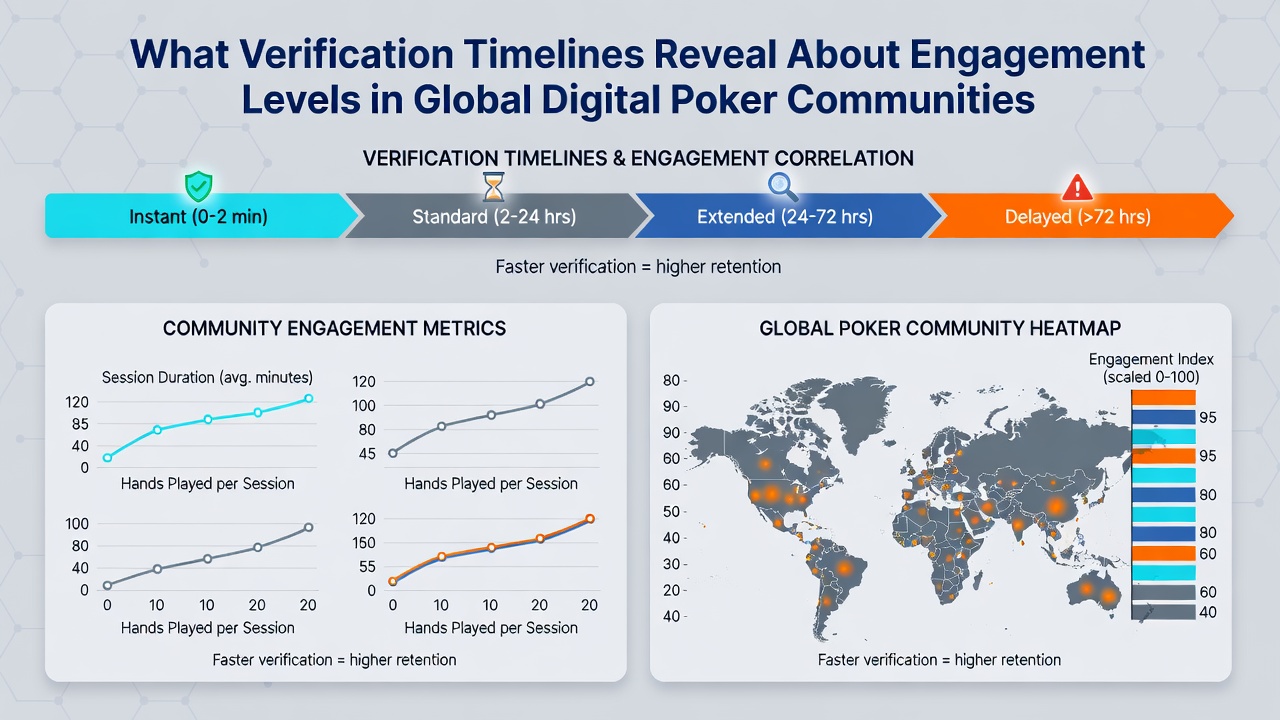
Studies tracking thousands of accounts reveal that verification completed within 24 hours associates with a 40 percent higher rate of weekly logins compared to those taking five or more days. This pattern holds across both desktop and mobile interfaces, although mobile users experience slightly faster average approvals when facial recognition tools integrate with the process. Observers point out that the relationship appears bidirectional, since highly engaged users often submit materials promptly, yet delays themselves appear to dampen momentum even among motivated participants.
Regional variations add further texture to these observations. Australian platforms, guided by oversight from the Australian Communications and Media Authority, report average verification times of 36 hours, and corresponding retention figures remain elevated through the first quarter of activity. In contrast, certain North American state-regulated sites process documents in under 12 hours during off-peak periods, which aligns with steadier daily participation rates documented in operator dashboards.
Mobile Interfaces and Cross-Platform Effects
Mobile applications have introduced streamlined upload options that reduce friction during document submission, and this development has narrowed the gap between initial registration and full account activation in several major networks. Analysts examining September 2026 traffic logs observe that players using mobile verification flows return for subsequent sessions at rates 25 percent above those relying on desktop uploads, which often involve additional steps for file formatting. The convenience factor extends beyond speed, because integrated camera features allow real-time capture of identification cards, thereby lowering abandonment during the waiting phase.
Yet the advantages do not apply uniformly. Older operating systems and regions with slower internet infrastructure continue to experience bottlenecks, and these conditions contribute to uneven engagement distribution across user demographics. Researchers tracking cohorts over six-month spans find that unresolved verification cases cluster among users who register during peak promotional periods, when support teams face higher inquiry volumes.
Regulatory Context and Platform Adaptations
European operators follow guidelines issued by the European Gaming and Betting Association, which emphasize both consumer protection and operational efficiency, and many have invested in machine-learning tools to accelerate initial screenings while reserving human oversight for flagged cases. These adaptations have shortened median timelines by approximately 30 percent since 2023, according to industry summaries. Platforms that adopted such technology early report sustained increases in multi-table participation and longer average session durations among newly verified accounts.
Additional data from academic reviews at institutions monitoring digital gambling trends suggest that transparent communication about expected processing times helps mitigate disengagement. When operators provide status updates via push notifications or in-app messages, the percentage of users who remain active during the verification window rises noticeably. This practice appears especially effective in markets where competition among sites remains intense.
Conclusion
Verification timelines function as measurable signals within broader engagement ecosystems, and the correlations documented across diverse regulatory environments indicate that faster, more transparent processes support continued participation in global digital poker communities. As operators refine their procedures through technological and procedural adjustments, the resulting data continues to inform strategies aimed at maintaining active user bases over extended periods. Continued monitoring through 2026 and beyond will clarify whether these patterns persist as new verification methods emerge.